
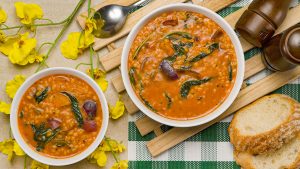
Enjoy a warm bowl of mixed vegetables with this mouthwatering vegetable soup! Pass around a bowlful of pistou, puree of tomatoes, basil, and garlic, as desired. This encourages everyone to stir a dollop into their bowls just before eating.
How To Make My Mother's Garden Vegetable Soup
An easy and nutritious way to consume vegetables, here’s how to make a garden vegetable soup to serve as an appetizer or a meal on its own.
Prep:
10 mins
Cook:
50 mins
Total:
1 hr
Ingredients
- 10 oz potatoes, peeled and diced
- 7 oz celery, diced
- 7 oz zucchini, trimmed and diced
- 6 oz leeks, white parts only, split lengthwise, thoroughly washed with cold running water, patted dry, and diced
- 5½ oz yellow onion, peeled and diced
- 5 oz carrots, peeled and diced
- 14 oz beans, (1 can), drained
- 4 tbsp olive oil
- ½ cup white wine
- 8 cups chicken broth, can be beef broth or vegetable broth, good quality canned or homemade
- salt and ground black pepper, to taste
For Tomato Pistou:
- 18 oz tomatoes, de-seeded and coarsely chopped
- 30 basil leaves, (roughly ⅓ cup), washed and dried
- 4 cloves garlic, peeled
- salt and ground black pepper, to taste
- 4 tbsp olive oil
To Serve:
- 1 tsp parmesan cheese, powdered or grated, per serving
- 1 slice crusty bread, per serving
Instructions
- In a soup pot, heat up the oil over medium heat. Add the leeks and onions. Sauté for about 5 minutes, until all the water evaporates and the vegetables are tender but not yet beginning to brown.
- Add the celery, potato, carrots, and zucchini. Continue sauteing.
- Deglaze with white wine and reduce briefly.
- Add broth, reduce the heat to maintain a gentle boil, and cook, uncovered, for 30 minutes, or until vegetables are tender.
- White waiting for the soup, prepare the Pistou. Combine all ingredients in a blender or food processor.
- Pulse the machine until the vegetables are pureed.
- Season to taste with salt and pepper. Adjust accordingly. Seal and set aside.
- About 10 minutes before the soup is done, add the canned beans and continue cooking until all the vegetables are tender.
- Once the soup is cooked, add half of the pistou into the soup. Stir to combine.
- Season the cooked soup with salt and black pepper to taste.
- Serve immediately. Have your guests help themselves with more pistou, parmesan cheese, and crusty bread while enjoying the warm soup.
Nutrition
- Sugar: 14g
- :
- Calcium: 191mg
- Calories: 604kcal
- Carbohydrates: 66g
- Cholesterol: 17mg
- Fat: 32g
- Fiber: 13g
- Iron: 5mg
- Monounsaturated Fat: 21g
- Polyunsaturated Fat: 4g
- Potassium: 1559mg
- Protein: 15g
- Saturated Fat: 5g
- Sodium: 2346mg
- Vitamin A: 8186IU
- Vitamin C: 55mg
Share your thoughts on My Mother's Garden Vegetable Soup Recipe in the Recipe Sharing forum and let us know if you have any cherished family recipes to share as well!
Was this page helpful?
Submit Your Own Recipe
Have your own special recipe to share? Submit Your Recipe Today!
Related Recipes









Comments